

Understanding Your Home’s Water Quality in Ventura County & the Best Water Treatment Solutions


Ventura County Water Quality & Treatment Guide
A Practical, Fact-Checked Breakdown for Homeowners
Ventura County Water: What You’re Dealing With
Water quality varies by city based on source (groundwater vs imported), treatment methods, and infrastructure. However, several patterns are consistent across Ventura County.
Common Across Most Cities
Hard water (moderate to very hard)
Chlorine & disinfection byproducts (TTHMs, HAA5)
Mineral scaling in pipes and water heaters
Sources:
U.S. Geological Survey (USGS) – Water Hardness https://www.usgs.gov/special-topics/water-science-school/science/hardness-water
U.S. EPA – Disinfection Byproducts https://www.epa.gov/dwreginfo/disinfection-byproducts
Agricultural Influence Areas (Nitrates)
More common in:
Oxnard
Camarillo
Santa Paula
Fillmore
Nitrates are primarily a drinking water concern (ingestion risk)
Source: U.S. EPA – Nitrates in Drinking Water. https://www.epa.gov/ground-water-and-drinking-water/national-primary-drinking-water-regulations
Naturally Occurring Contaminants
Arsenic
Hexavalent Chromium (Chromium-6)
Present in varying levels across California groundwater.
Sources:
U.S. EPA – Arsenic Rule https://www.epa.gov/dwreginfo/arsenic-drinking-water
California OEHHA – Chromium-6 Public Health Goal https://oehha.ca.gov/water/hexavalent-chromium-drinking-water-public-health-goal
Coastal Considerations
Areas like Port Hueneme may experience:
Higher mineral content
Increased scaling potential
Source: USGS – Groundwater & coastal aquifer influence https://www.usgs.gov/mission-areas/water-resources
EWG Data: What It Means
According to the Environmental Working Group Tap Water Database:
Multiple contaminants are commonly detected
Some exceed EWG health-based guidelines
Important distinction:
EPA standards = legal limits
EWG guidelines = health-based (more stringent)
Source: Environmental Working Group Tap Water Database https://wwww.ewg.org/tapwater

How Your Water Affects Your Home
🚿 Showers & Bathing
Chlorine can volatilize and be inhaled in steam
Hard water leaves mineral residue on skin and hair
Effects:
Dry skin and irritation
Dull or heavy-feeling hair
Soap film and buildup
Source: EPA – Chlorine & DBP exposure pathways https://www.epa.gov/dwreginfo/disinfection-byproducts
🧺 Laundry
Hard water reduces detergent effectiveness
Leads to:
Stiffer fabrics
Fading colors
Increased detergent usage
Source: USGS – Hard water impacts https://www.usgs.gov/special-topics/water-science-school/science/hardness-water
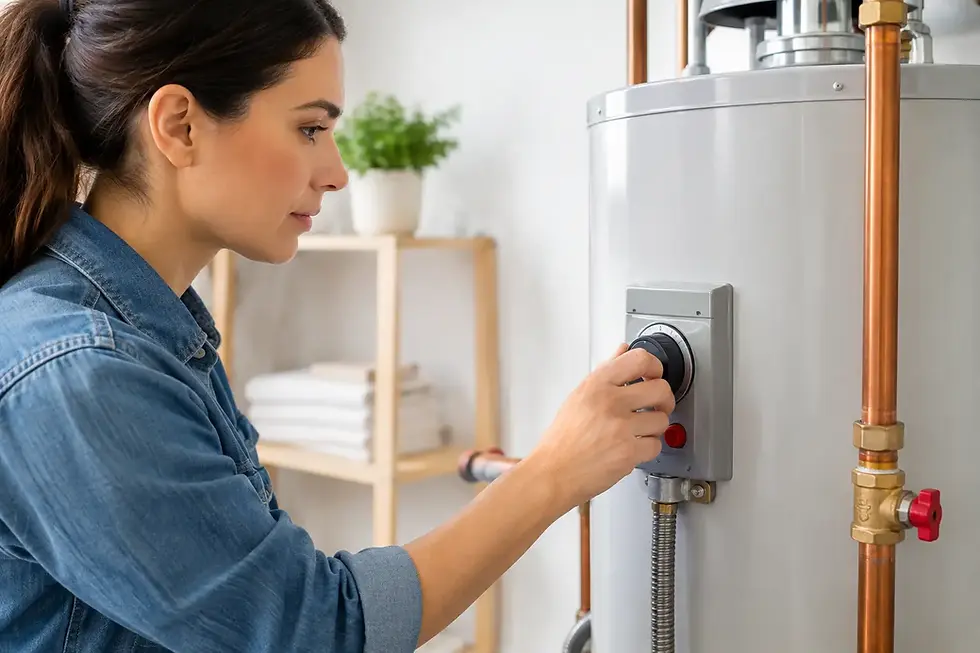
🔥 Water Heaters & Plumbing
Scale buildup:
Reduces heat transfer efficiency
Increases energy usage
Shortens equipment lifespan
Source: U.S. Department of Energy – Water Heating Efficiency https://www.energy.gov/energysaver/water-heating
🥤 Drinking Water (People & Pets)
Primary concerns:
Arsenic
Chromium-6
Nitrates
Disinfection byproducts
Key point:Risk is tied to long-term ingestion, not short-term exposure.
Sources:
EPA Drinking Water Standardshttps://www.epa.gov/ground-water-and-drinking-water
EWG Tap Water Database
Water Treatment Systems (What They Do)
No single system solves all water problems. Each addresses a specific category.

1. Whole House Filtration & Conditioning
(e.g., systems like Halo Water Systems)
What they do:
Reduce chlorine and improve taste/odor
Reduce some organic compounds and sediment
Condition water to reduce scale formation (not remove hardness)
Source: EPA – Drinking Water Treatment Methods https://www.epa.gov/ground-water-and-drinking-water
Where they help:
🚿 Showers
Reduced chlorine exposure
Less irritation and odor
🧺 Laundry
Reduced chemical residue
Improved fabric feel
🔥 Plumbing
Reduced scaling (conditioning effect)
Reduced chemical stress on materials
🥤 Drinking (general)
Improved taste and odor
Limitations:
Do NOT remove:
Arsenic
Chromium-6
Nitrates
Do NOT fully soften water
Performance depends on system design and media
Bottom line:
Improves whole-home water quality and comfort, but not full contaminant removal.

2. Water Softeners
What they do:
Remove calcium and magnesium via ion exchange
Source:
USGS – Water Hardness
Where they help:
🚿 Showers
Softer skin and hair
Better soap performance
🧺 Laundry
Softer fabrics
Less detergent needed
🔥 Plumbing
Prevents scale buildup
Extends equipment lifespan
Limitations:
Do NOT remove contaminants (arsenic, chlorine, nitrates, etc.)
Require salt and maintenance
Bottom line:
Best solution for scale and plumbing protection, not water purification.

3. Reverse Osmosis (RO) Systems
What they do:
Remove dissolved contaminants through membrane filtration
What they remove:
Arsenic
Chromium-6
Nitrates
Total dissolved solids
Source: EPA – Drinking Water Treatment https://www.epa.gov/ground-water-and-drinking-water
Where RO helps:
🥤 Drinking Water
Highest level of purification
Ideal for consumption and cooking
Limitations:
Point-of-use only
Produces wastewater
No impact on showers or plumbing
Bottom line:
Best for drinking water purification only.
4. Point-of-Use (POU) Filtration
(e.g., Body Glove or similar style under sink filtration system)
What they do:
Improve taste and reduce chlorine at a single tap
What they remove (typical carbon filters):
Chlorine
Odor/taste compounds
Some VOCs
Lead (if certified)
Source:
EPA – Drinking Water Treatment
Limitations:
Do NOT remove:
Arsenic
Chromium-6
Nitrates
Do NOT treat whole home
Do NOT address hardness
Bottom line:
Cost-effective drinking water improvement, not full filtration.
Simple System Comparison (What Does What)
Filtration (Activated Carbon) → improves chemical exposure and comfort
Reverse Osmosis → removes dissolved contaminants for drinking
Softener (Ion Exchange) → fixes scale and plumbing issues
No single system completely replaces another—they solve different problems.
*The following chart is a list of contaminants found within Calleguas Municipal Water District's water supply according to ewg.org
CONTAMINANTS | ACTIVATED CARBON | REVERSE OSMOSIS | ION EXCHANGE |
Arsenic | ❌ | ✅ | ✅ |
Bromochloromethane | ✅ | ✅ | ❌ |
Bromodichloromethane | ✅ | ✅ | ❌ |
Bromoform | ✅ | ✅ | ❌ |
Chloroform | ✅ | ✅ | ❌ |
Dibromoacetic acid | ✅ | ✅ | ❌ |
Dibromochloromethane | ✅ | ✅ | ❌ |
Dichloroacetic acid | ✅ | ✅ | ❌ |
Haloacetic acids (HAA5) | ✅ | ✅ | ❌ |
Radon | ✅ | ✅ | ❌ |
Total trihalomethanes (TTHMs) | ✅ | ✅ | ❌ |
Trichloroacetic acid | ✅ | ✅ | ❌ |
Uranium, combined (pCi/L) | ❌ | ✅ | ✅ |
Dibromomethane | ✅ | ✅ | ❌ |
Dichloromethane (methylene chloride) | ✅ | ✅ | ❌ |
Fluoride | ❌ | ✅ | ❌ |
Manganese | ❌ | ❌ | ✅ |
Monobromoacetic acid | ✅ | ✅ | ❌ |
Monochloroacetic acid | ✅ | ✅ | ❌ |
Nitrate | ❌ | ✅ | ✅ |
Nitrate & nitrite | ❌ | ✅ | ✅ |
Nitrite | ❌ | ✅ | ✅ |
Selenium | ❌ | ✅ | ❌ |
Vanadium | ❌ | ❌ | ✅ |
Xylenes (total) | ✅ | ✅ | ❌ |
*Based on a 2013-2023 data study per https://www.ewg.org/tapwater/system.php?pws=CA5610050
Recommended Setups (Ventura County)
⭐
Most Cost-Effective (Basic Drinking Water Improvement)
Point-of-use filtration at the kitchen sink
Can be connected to refrigerator/ice maker
Best for: Improving taste and reducing chlorine in drinking water at the lowest cost
⭐⭐
Most Practical (Whole-Home Improvement)
Whole house filtration + conditioning system
Best for:
Improving water quality throughout the home
Reducing chlorine exposure
Minimizing scale buildup (without full softening)
⭐⭐⭐
Most Practical (Enhanced Water Quality)
Whole house filtration + conditioning
Reverse osmosis system at kitchen sink
Best for:
Whole-home water quality + comfort
High-quality drinking water (removes dissolved contaminants)
⭐⭐⭐⭐
Maximum Performance (Ultimate Protection & Quality)
Water softener
Whole house filtration
Reverse osmosis system
Best for:
Complete scale elimination
Full-home chemical reduction
Highest level of drinking water purity
Final Takeaway
Ventura County water is:
Mineral-heavy (hard water)
Chemically disinfected (chlorine & byproducts)
Contains trace contaminants (per EWG data)
The key distinction:
“Meets standards” does not always mean optimized for long-term health, plumbing system & appliance longevity, or daily comfort.
The most effective approach is not choosing one system—it’s matching the right system to address each problem to produce the desired outcome.


Comments