

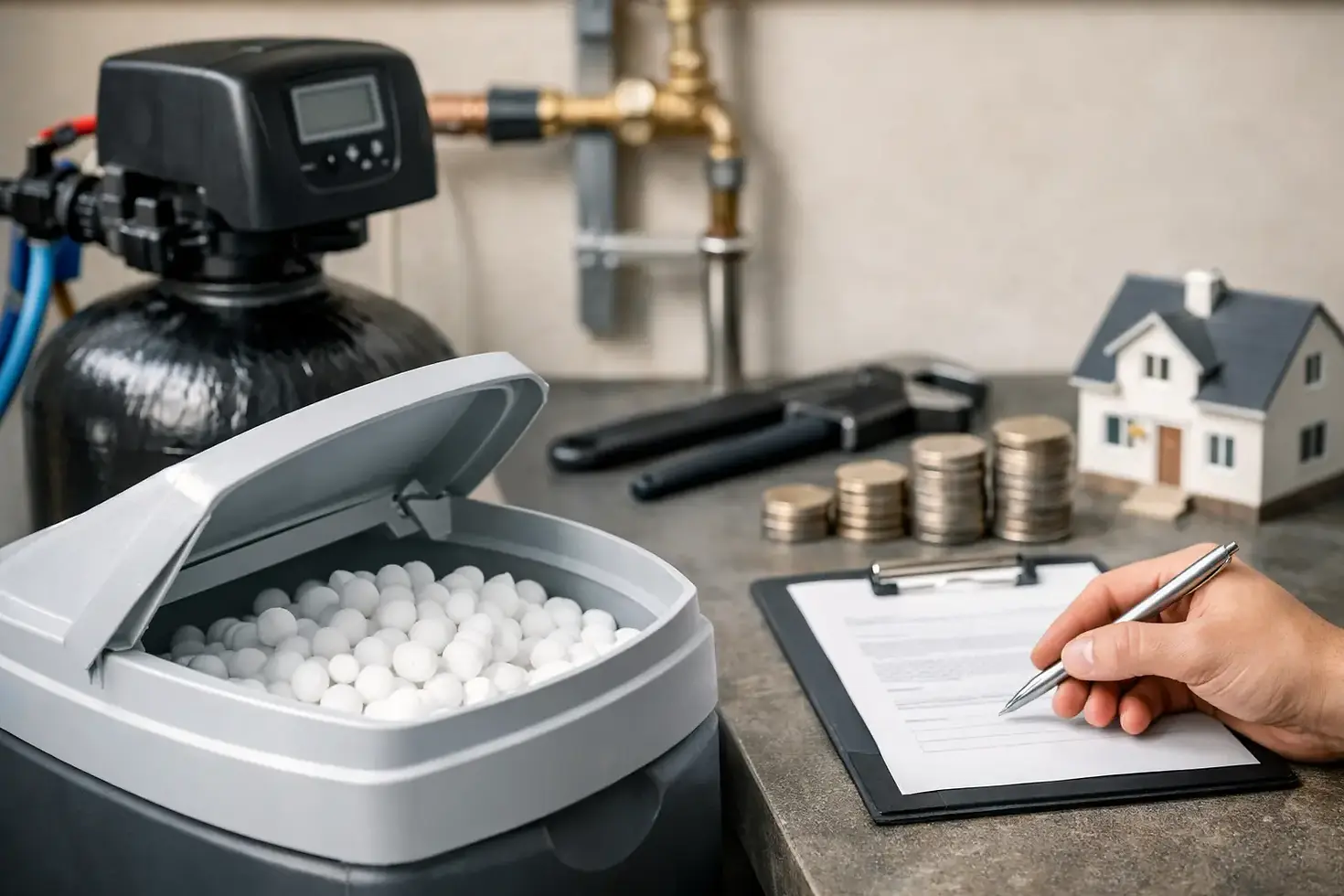
Water Softener Installation Cost Explained

Hard water usually announces itself in annoying little ways first - crusty faucets, spotted dishes, itchy skin, and a water heater that seems to work harder than it should. If you are researching water softener installation cost, you are probably already dealing with at least one of those problems and wondering what it will actually take to fix them.
The honest answer is that cost depends on the system you choose, the plumbing layout in your home, and whether the installation is straightforward or needs upgrades to meet current standards. For most homeowners, the real question is not just price. It is whether the investment will protect fixtures, improve water quality, and help other equipment in the home last longer.
What is the typical water softener installation cost?
In many homes, water softener installation cost falls somewhere between about $1,500 and $4,500 for equipment and professional installation. That is a broad range, but there is a reason for it. A basic single-tank unit installed near an accessible main line will usually cost much less than a larger premium system installed in a tight garage, crawl space, or older home with plumbing modifications.
If you see prices online that are much lower, read the fine print carefully. Some quotes reflect equipment only. Others assume ideal conditions that rarely match real homes. A properly installed system should include not just the softener itself, but the labor, fittings, bypass valve, drain connection, startup, and programming. In some cases, permits or code-related updates may also be part of the job.
What drives the cost up or down?
The type and size of the softener
A small home with one or two occupants does not need the same capacity as a larger family household with multiple bathrooms and heavier water use. Bigger systems cost more, but undersizing is a mistake that leads to poor performance and more frequent regeneration.
System design matters too. Entry-level salt-based softeners tend to cost less than higher-end models with better controls, efficiency features, or advanced resin performance. Some homeowners also pair a softener with pre-filtration or a whole-house filtration system if sediment, chlorine, or other water quality issues are present. That raises the project cost, but it can also solve more than one problem at once.
Your home’s plumbing layout
This is one of the biggest variables and one homeowners rarely see coming. If the main water line is easy to access and there is space for the unit, installation is usually straightforward. If the installer has to reroute plumbing, add a loop, create a drain connection, or work around a cramped utility area, labor goes up.
Older homes can add another layer. Galvanized piping, limited shutoff access, aging valves, or previous DIY plumbing work can all slow a project down. Southern California homes vary a lot, especially across older neighborhoods and custom properties, so two homes on the same street may have very different installation needs.
Drain, electrical, and code requirements
Most water softeners need a drain for regeneration discharge. If there is no practical drain nearby, extra work may be needed. Some systems also require an electrical outlet within reach. If one is not available, that adds another trade involved in the project.
Code compliance matters as well. A professional installer should make sure the setup includes the right shutoffs, air gap or drain configuration where required, earthquake considerations if applicable to nearby equipment, and a clean, serviceable layout. That may not be the most exciting part of the estimate, but it is part of what protects your home long term.
Equipment cost vs. installation cost
When homeowners compare quotes, it helps to separate the softener itself from the labor and installation materials. The equipment may account for a large share of the total, especially with premium brands, but installation is not a minor add-on. It includes diagnosis, sizing, plumbing work, testing, and setup.
A bargain unit installed poorly can be more expensive over time than a better system installed correctly from day one. Leaks, poor regeneration settings, hard water bypass, and premature wear on the unit or nearby fixtures can all erase the savings pretty quickly.
Why cheaper is not always cheaper
A low price can be perfectly legitimate if the job is simple and the equipment is basic. But if one quote is dramatically lower than the rest, ask what is missing. Sometimes the installer is not including haul-away, startup, warranty support, permits, or plumbing modifications that are likely to come up once work begins.
This is especially important if your water heater already has visible scale buildup or your plumbing shows signs of long-term hard water stress. A softener is part of the bigger picture of your home’s water system. It should be installed with attention to flow rate, pressure, maintenance access, and how it affects appliances that rely on clean, efficient water.
Does a water softener save money over time?
It often can, but the savings are not always dramatic or immediate. A water softener helps reduce scale buildup inside pipes, fixtures, showerheads, dishwashers, washing machines, and especially water heaters. That matters because hard water scale makes heating equipment less efficient and can shorten the life of components.
If your home has significant hardness, softening the water may help reduce soap use, cut down on cleaning products, and limit wear on plumbing fixtures. You may also notice better shower performance, softer laundry, and less buildup on glass and tile. Those benefits are real, even if they do not show up as a single line item on a utility bill.
For many homeowners, the value is just as much about avoiding future problems as it is about monthly savings. Preventing premature appliance replacement, reducing service calls, and protecting a newer water heater can make the investment easier to justify.
Should you repair your water quality with a softener alone?
Not always. Hardness is only one part of the water quality picture. If you also have sediment, chlorine taste, odor, iron, or other concerns, a softener may need to be paired with additional treatment. That increases the initial cost, but it can be the right move if your goal is cleaner water throughout the house, not just scale control.
This is where good guidance matters. Homeowners are sometimes sold a softener when what they really need is a broader treatment plan. Other times, they are sold a complicated setup when a properly sized softener and simple pre-filter would do the job. The best recommendation depends on your actual water conditions and how your household uses water every day.
Questions worth asking before you approve the job
Before moving forward, ask what capacity is being recommended and why. Ask whether the quote includes all plumbing materials, startup, programming, warranty support, and any likely code upgrades. You should also ask where the unit will be installed, how it will drain, and what routine maintenance will look like.
A good contractor should be able to explain the options in plain English. You should not have to guess what you are buying or why one system costs more than another. Clear answers usually mean a cleaner installation and fewer surprises.
What homeowners in Southern California should keep in mind
In Santa Barbara, Ventura, and nearby Los Angeles County communities, water conditions and home layouts can vary quite a bit. Some homes have enough hardness to make a softener a smart long-term investment, especially when protecting water heaters, tankless systems, and newer plumbing fixtures. In those cases, the right installation is about more than comfort. It is about preserving efficiency and reliability.
That is why companies like The Water Heater Wizard often look at the whole system, not just the softener. Hard water does not only leave spots on your glasses. It can quietly affect the equipment that keeps your home running comfortably every day.
If you are comparing estimates, focus on value over sticker shock. The right water softener installation cost should reflect proper sizing, solid workmanship, and a setup that actually solves the problem. When it is done right, you are not just buying softer water. You are giving your home one less reason to surprise you at the worst possible time.


Comments