


Why Is My Hot Water Not Lasting?

One shower in, and the hot water is already fading. If you’ve been asking, "why is my hot water not lasting," you’re not dealing with one single possible problem. Short hot water can come from a thermostat issue, sediment buildup, a failing heating element, an undersized system, or even a plumbing fixture that’s pulling more hot water than you realize.
The good news is that this symptom usually leaves clues. The trick is knowing which clues point to a quick adjustment and which ones mean your water heater needs professional repair or replacement.
Why is my hot water not lasting? Start with the pattern
Before blaming the water heater itself, pay attention to how the problem shows up. Does hot water run out only during back-to-back showers, or even when one person takes a normal shower? Is it happening at every fixture, or just one bathroom? Did it get worse gradually, or did it seem to change overnight?
Those details matter. A gradual loss of hot water often points to sediment buildup or aging components. A sudden change can suggest a broken heating element, a thermostat problem, or a mixing valve issue. If the problem is isolated to one shower, the water heater may not be the main issue at all.
Common reasons your hot water runs out fast
Sediment buildup is stealing tank capacity
In many Southern California homes, hard water is a major factor. Minerals settle at the bottom of a tank water heater over time and create a layer of sediment between the burner or heating element and the water you actually use. That buildup reduces efficiency and can make the tank act smaller than it really is.
If your water heater used to deliver enough hot water and now it doesn’t, sediment is high on the list. You might also hear rumbling or popping noises from the tank. That sound happens when water gets trapped under sediment and overheats.
A heating element may have failed
On an electric water heater, a failed upper or lower heating element can cut your hot water supply dramatically. In many cases, the water may start warm, then turn cool much sooner than it should. Because electric units rely on those elements to recover and maintain temperature, losing one can make the system feel weak even if it still produces some hot water.
This is one of the more common causes when homeowners say the issue started suddenly. It usually requires testing and replacement rather than guesswork.
The thermostat could be set wrong or failing
Sometimes the answer is surprisingly simple. If the thermostat is set too low, your household will run through usable hot water faster. Other times, the thermostat itself isn’t reading accurately or responding the way it should.
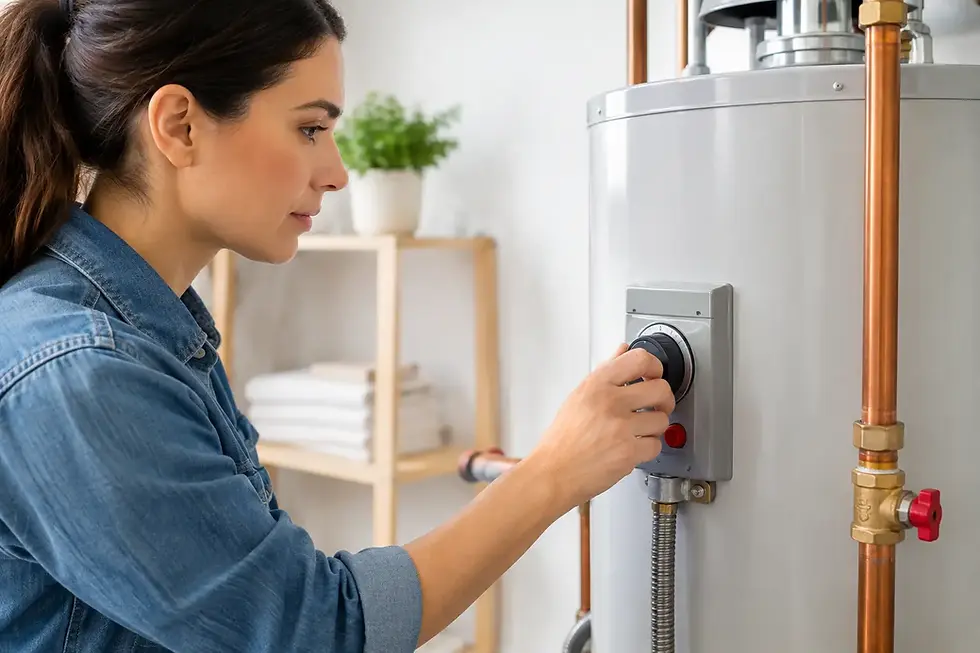
Most homeowners should not open up gas or electric water heater components without understanding the safety issues involved. But if your unit has an accessible external control and the setting was bumped down, correcting it may help. If not, the thermostat may need professional service.
Your water heater may be too small for your household
A water heater that worked fine when two people lived in the house may struggle once you add kids, guests, laundry, or a larger soaking tub. This is especially common after home upgrades. A new showerhead with higher flow, a bigger tub, or extra bathroom use can expose a sizing problem that was always there.
This is where trade-offs matter. A small tank can be cheaper upfront, but if it leaves you with cold showers every morning, it’s not really saving you money. In some homes, a larger tank is the right fix. In others, a properly selected tankless system or a recirculation upgrade may make more sense.
The dip tube could be damaged
Inside a tank water heater, the dip tube sends incoming cold water to the bottom of the tank so it can be heated properly. If that tube cracks or breaks, cold water can mix near the top of the tank where hot water exits. The result is shorter hot water duration and inconsistent temperatures.
This is not something most homeowners can diagnose by sight alone, but it’s a known cause of hot water that runs out too fast.
A shower valve may be the real problem
If one shower loses heat quickly while sinks and other fixtures seem normal, the issue may be at the shower valve. Pressure-balancing or thermostatic mixing valves can wear out and blend in too much cold water. That makes it seem like the water heater is underperforming when the problem is really local to one fixture.
This is why a whole-house symptom and a single-fixture symptom should be treated differently.
Tankless systems have their own reasons
If you have a tankless water heater, “not lasting” usually means the water is turning lukewarm, fluctuating, or failing to keep up with demand. Common reasons include scale buildup in the heat exchanger, restricted flow, a clogged inlet filter, improper sizing, or multiple fixtures running at once beyond the unit’s output.
Tankless units do not store hot water, so they don’t “run out” in the same way a tank does. But they absolutely can struggle if maintenance has been skipped or the system wasn’t sized correctly for the home.
What you can check before calling for service
There are a few homeowner-safe observations that can help narrow things down. Check whether the issue happens at every faucet and shower. Notice whether the water starts hot and fades fast, or never gets fully hot in the first place. Listen for unusual tank noises. Look around the unit for signs of leaking, rust, or moisture.
Also think about recent changes in the home. More occupants, appliance upgrades, or plumbing work can all affect hot water performance. If your utility bill has shifted along with the hot water problem, that’s another useful clue.
For tank systems, age matters too. If the unit is pushing 8 to 12 years or beyond, especially in a hard water area, declining performance may be part of a larger wear-and-tear picture. Repair might still be worthwhile, but sometimes repeated hot water complaints are the system telling you it’s near the end of its reliable life.
When short hot water means it’s time for repair
If your water heater is the right size and the problem is new, repair is often the best path. A bad element, thermostat issue, failed dip tube, burner problem, or tankless scale buildup can often be corrected without replacing the whole system.
This is where specialization helps. Water heating problems can look similar on the surface, but the right fix depends on accurate diagnosis. Replacing parts at random gets expensive fast, and on gas systems it can create safety risks.
A focused water heater technician can test recovery rate, confirm temperature output, inspect components, and tell you whether the unit is worth repairing or whether you’re spending money on borrowed time.
When replacement makes more sense
If the unit is older, heavily scaled, undersized, or showing multiple failure signs, replacement may be the smarter investment. That is especially true if your household has outgrown the current setup.
Replacement is not just about getting hot water back. It’s a chance to correct the original problem. Maybe you need more capacity. Maybe you need better efficiency. Maybe you need a system that handles Southern California hard water better with regular maintenance. In some homes, a recirculation solution can also improve comfort and reduce the wasted water that comes from waiting at distant fixtures.
At The Water Heater Wizard, that conversation is usually straightforward: what’s failing, what can be repaired, what’s worth replacing, and what will actually keep the hot water going when your family needs it.
How to make hot water last longer
Once the immediate problem is fixed, a few habits can help protect performance. Regular flushing helps reduce sediment in tank models. Tankless systems need descaling on schedule, especially in hard water areas. Checking the anode rod on tank units can extend tank life. And if your home has persistent mineral issues, water treatment may help the heater and other plumbing components last longer.
Usage habits matter too, but only up to a point. Staggering showers and laundry can reduce demand, though homeowners should not have to build their whole morning around a struggling water heater. If normal family use overwhelms the system, the equipment or setup probably needs attention.
If you’re still wondering why your hot water is not lasting, trust the pattern you’re seeing. Water heaters rarely fix themselves, and short hot water is often the early warning before a bigger failure. Catch it now, and you have a much better chance of turning those cold showers back into a problem of the past.


Comments